
What this represents
The this keyword in JavaScript is a reference to an object, and its value is determined by the context in which a function is executed, not where it is defined.
It's value is determined by in which environment we are dealing with.
this is context-dependent.
this in global context
If you print this
console.log(this);
In return you will get an empty {} object which is typically refers to the object that is currently executing the code
If on browser then => window
If on NodeJS then => Global Object
this is context-dependent. Remember!
this inside objects
When this is used inside an object's method, it refers to the object itself.
const anime = {
    name: "Spy x Family",
    getAnime(){
        console.log(this.name);
    }
}
anime.getAnime()

this inside functions
this in inside functions have several values.
If we console the type of this in a function
Output will be an object
function anime() {
   // non strict mode
   console.log(typeof this);
}
anime()

How calling context changes this
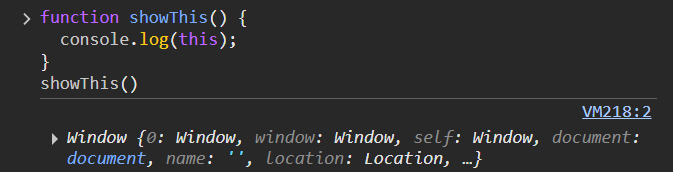
However, If we same do this on Browser this content will be changed. As we know it's value is defined in which environment we are talking about
In strict mode:
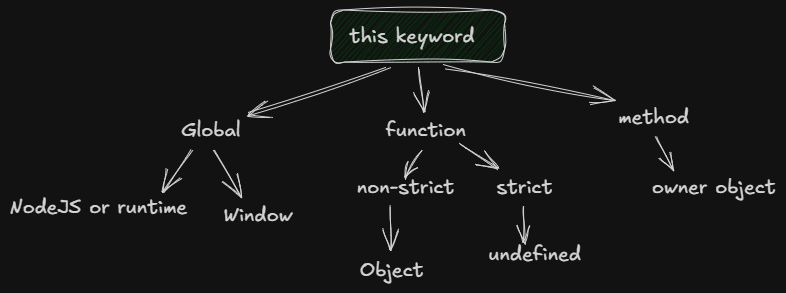
In strict mode ('use strict'), this inside a function will be undefined if it is not bound to any object.

Conclusion
Understanding this is essential for writing predictable JavaScript. In short:
thisis a reference to an object that is determined by how a function is called (the call site), not where it is defined.In the global scope it typically refers to the global object (
windowin browsers,globalin Node.js), though strict mode and certain environments can change that.Inside an object method,
thisnormally refers to that object (the receiver).In regular functions,
thisdepends on the call: it can be the global object,undefined(in strict mode), or whatever object was used to call the function.Arrow functions do not have their own
this; they inheritthislexically from the surrounding scope.
Best practices:
Prefer explicit binding or arrow functions for callbacks where the intended
thisshould be preserved.Use strict mode to avoid accidental
thisbeing the global object.Test and be deliberate about how functions are invoked to avoid surprising
thisbehavior.
Keeping these rules in mind will help you reason about and control this across different contexts.
You are all set!
written by theadroitdev(Shivam Verma) :)
X → https://x.com/theadroitdev
Github → https://github.com/TheAdroitDev
ChaiCode Repo → https://github.com/TheAdroitDev/ChaiCode-Cohort-2026


